Space start / pause · → skip word
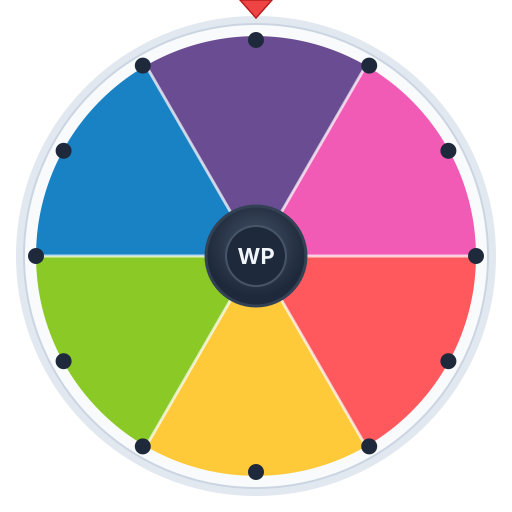
Pick your round length, spin for a word, and go until the buzzer. Thirty seconds to two minutes, with an audible countdown over the last five.
Space start / pause · → skip word
Paste your list below, one item per line
A kitchen timer tells you when time is up. A round timer has to do more than that: it has to let you feel the round closing while your attention is somewhere else entirely — on the beat, on the rhyme you are three words away from landing. That is why this one escalates. The ring runs indigo, turns amber at ten seconds, goes red and pulses at five, and ticks audibly so you never have to break flow to check.
It also resets the way practice actually works. Spin and the clock refills and restarts in one action, because the gap between reps is where practice sessions quietly die.
30 seconds is the rep. Short enough to go again immediately, long enough to expose the moment your first idea runs dry. If you are building the reflex, live here.
60 seconds is the standard. It is the length most online freestyle challenges use and roughly a full sixteen at a moderate tempo. This is the one to be comfortable with.
90 seconds starts demanding structure. You cannot hold one idea that long, so you have to consciously change direction — and learning where to turn is a separate skill from rhyming.
Two minutes is performance length. Battle rounds and showcase verses sit here. Do not start here; you will just learn to ramble.
Set the timer to 30 or 60, put the phone or laptop where the circle can see it, and let the wheel do the hosting. Each person spins their own word, which removes the awkward job of someone having to think up topics on the spot, and the automatic start means the round is live the instant the wheel stops.
The ding is the pass. Whoever is next hits SPIN. Because nobody has to touch anything except the spin button, the circle keeps its rhythm — and a cypher that keeps rhythm is a cypher people stay in.